Koretskii, Viktor Borisovich (Koretsky, Victor)
Born 1909 Kiev, Russian Empire; died 1998, Moscow, Russia
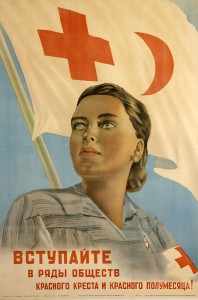
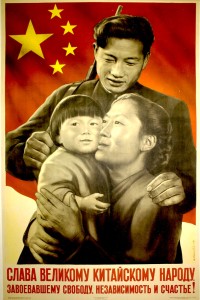
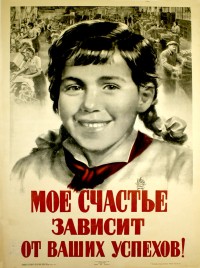
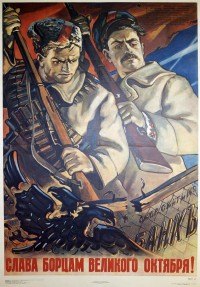
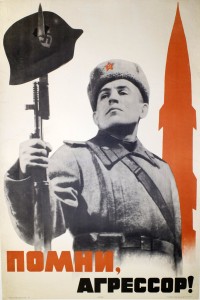
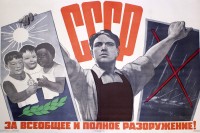
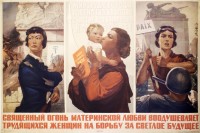
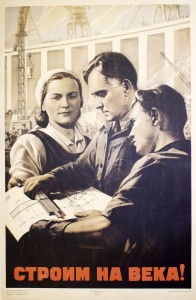
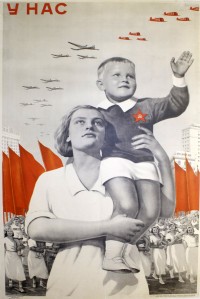
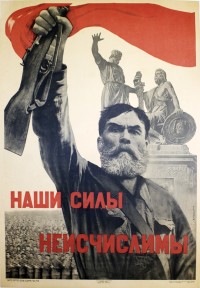
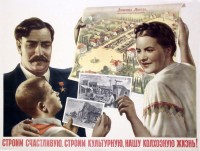
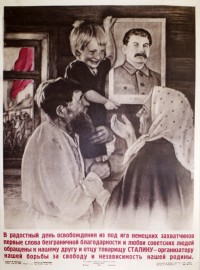
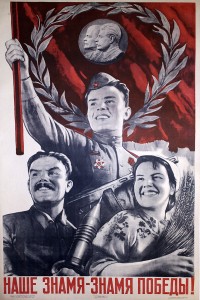
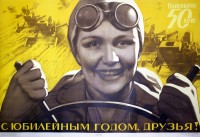
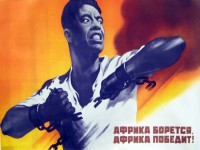
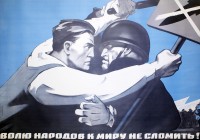
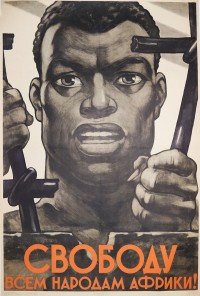
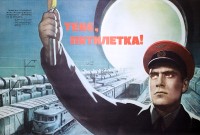
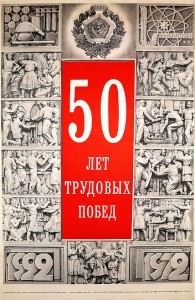
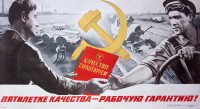
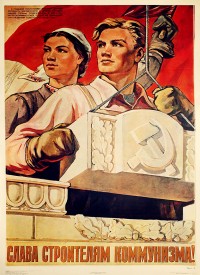
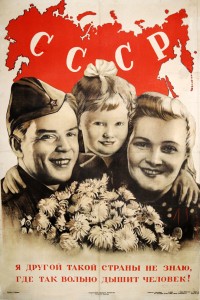
Of the photomontage artists during the 20th century, Viktor Borisovich Koretskii stands out as one of the most iconic. Koretskii's prolific career in the Soviet Union began in the 1930s and it ended during the 1980s. Along the way, his unique style influenced generations of graphic artists worldwide.
From 1921 to 1929, Viktor Koretskii attended the Moscow Secondary School of Professional Art, and by 1931 he was working as a professional graphic designer. Koretskii perfected his own technique of photomontage using a combination of photographs and pencil drawings topped with gouache -- a mixture of pigments and water blended with a binding agent. Koretskii's earliest forays into poster design began with Brigada KGK (Brigade KDK), a visual design consortium that included the artist, Vera Gitsevich, and Boris Knoblok. Koretskii's professional break-through occurred while he was working for the Soviet publishing houses of Iskusstvo and Ogiz-Izogiz. In the 1930s, Koretskii also worked as an artistic director and decorator for Nikolai Okhlopkov's Realistic Theatre and for Yurii Zavadsky's theatre-studio.
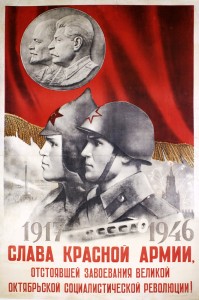
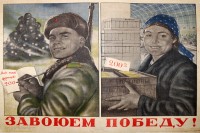
During World War II, Koretskii designed posters for the war effort. While working for TASS (Telegraph Agency of the Soviet Union) Windows Studios, he designed two posters for them in June 1942. Consequently, he designed the first Soviet postage stamp dedicated to the Second World War. In 1946 and in 1949, Koretskii was awarded the Stalin Prize for his art work. He was a founding member of the artist collective AgitPlakat (formed in 1956), and from 1939 to 1987, he was a member of the editorial board of Reklamfilm motion picture advertising.
In 1951, Koretskii’s design work was chastised by Vladimir Kemenov, Soviet art critic and deputy director of the Institute of Art History. Kemenov, a vehement opponent of photomontage, attacked Koretskii for his “formalist deviation” and for specific design choices used in his posters. In her 2012 book about Koretskii’s career, historian Erika Wolf commented that he was made a scapegoat because he was, “…a Jewish artist who had earlier dabbled in fragmented photomontage and worked with photography.” The criticism ultimately led Koretskii to completely change his design style.
In 1964, Viktor Koretskii was bestowed the title of Honored Worker of Art of the RSFSR (Russian Soviet Federative Socialist Republic) and he was awarded a gold medal by the Soviet Peace Committee the same year.
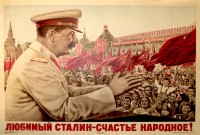
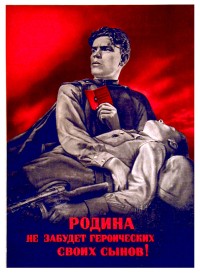
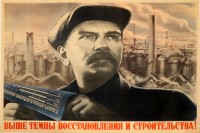
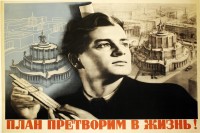
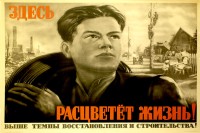
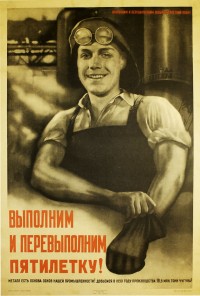
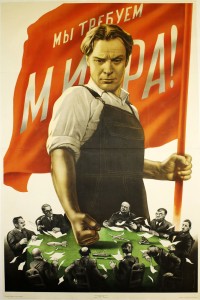
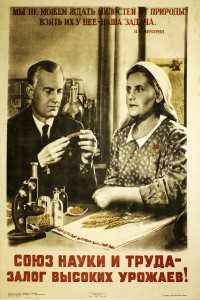
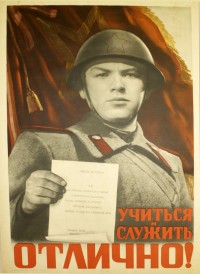
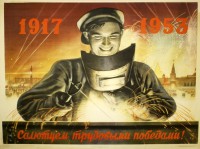
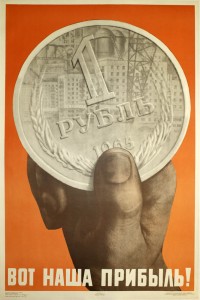
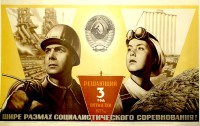
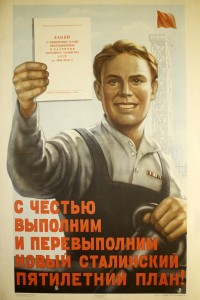
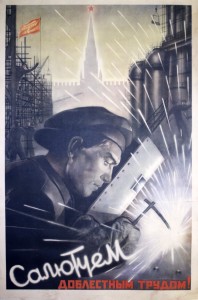
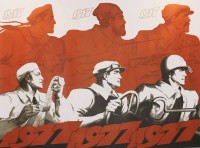
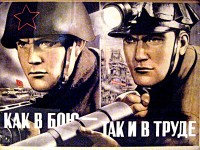
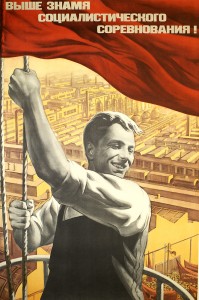
![PP 098: The 20th congress of the communist party of the Soviet Union [KPSS]
Beyond the plan.
Let's present our labor achievements!](https://www.posterplakat.com/thumbs/the-collection/posters/pp-098/pp098-200x300.jpg)
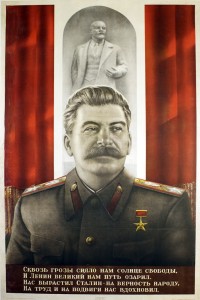
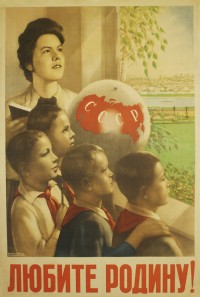
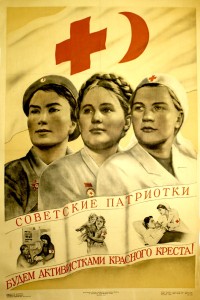
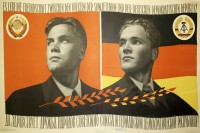
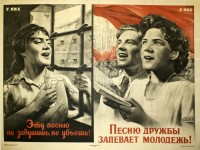
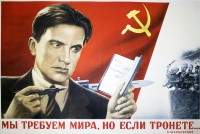
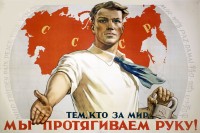
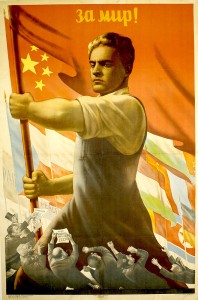
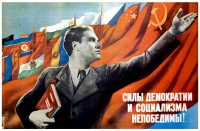
![PP 180: We are for peace!
[Song lyrics] “We are for peace! And we will carry this song to our friends around the world!”](https://www.posterplakat.com/thumbs/the-collection/posters/pp-180/pp180-200x300.jpg)
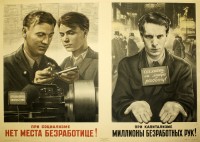
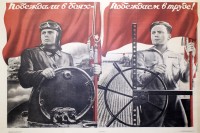
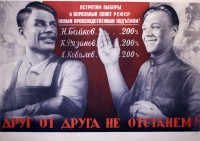
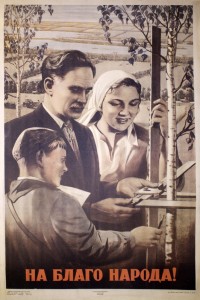
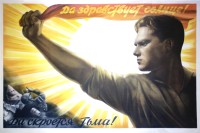
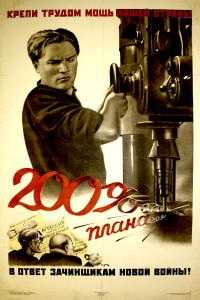
![PP 513: My [machine] part is strong and precise and it will serve the motherland!](https://www.posterplakat.com/thumbs/the-collection/posters/pp-513/pp513-200x149.jpg)
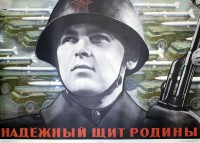
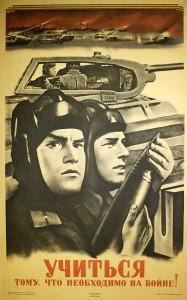
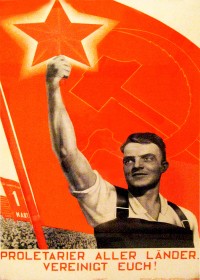
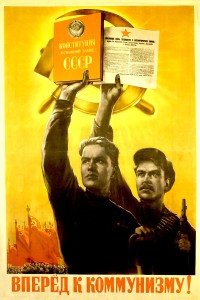
![PP 737: Long Live Stalin’s Constitution!
[Quote in middle] “It’s pleasing and joyful to know what our people fought for and how they achieved a victory of historical significance for the whole world.” --J. Stalin.](https://www.posterplakat.com/thumbs/the-collection/posters/pp-737/pp737-200x278.jpg)
![PP 744: To Beloved Moscow -
For New Centuries!
1147-1947 [anniversary date]](https://www.posterplakat.com/thumbs/the-collection/posters/pp-744/pp744-200x133.jpg)
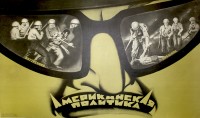
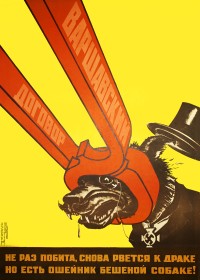
![PP 818: These are “Human Rights” in the Capitalist World.
128.4 billion dollars – budgeted by the USA, the chief citadel of capitalism, during fiscal year 1979 for military purposes. This includes nuclear, thermonuclear, and neutron bombs, “flying fortresses,” and airborne rockets: the blood and tears of millions of people. [partial translation]](https://www.posterplakat.com/thumbs/the-collection/posters/pp-818/pp-818-catalog-image-200x147.jpg)
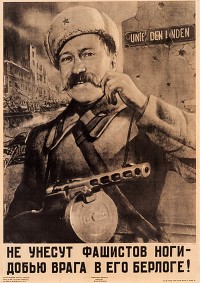
![PP 894: Be worthy of [your] fathers!
Never forget the exploits of Soviet soldiers, achieved by them during the Patriotic War.](https://www.posterplakat.com/thumbs/the-collection/posters/pp-894/pp-894-catalog-image-156x300.jpg)
Sources & Citations
Wolf, E. (2012). Koretsky: The Soviet Photo Poster, 1930-1984. New York: The New Press. (pp. 7-11)
Zegers, P., et al. (2011). Windows on the war: Soviet TASS posters at home and abroad, 1941-1945. Chicago: Art Institute of Chicago. (bio on the artist)
Petrova, Y. et al. (2005). Russian and Soviet Collages, 1920s-1990. St. Petersburg: Palace Edition.
Sintovskaia, G. (1984). Viktor Koretskii. Moscow: Planeta. (pp. 5-23)
Koretskii, V. (1958). Zamteki plakatista. Moscow: Sovetskii khudozhnik.
Kemenov, V. (1956). Stat'i ob iskusstve, "O politicheskom placate." Moscow: Iskusstvo. (pp. 42-73)
Ol'shanskaia, N.I. (1951). Mastera sovetskogo iskusstva viktor borisovich koretskii Moscow: Sovetskii khudozhnik. (pp. 7-27)
Baburina, N. I. (1988). The Soviet Political Poster, 1917-1980. New York: Penguin. (bio, artist)